Sunday, July 30, 2006

Michel Francois


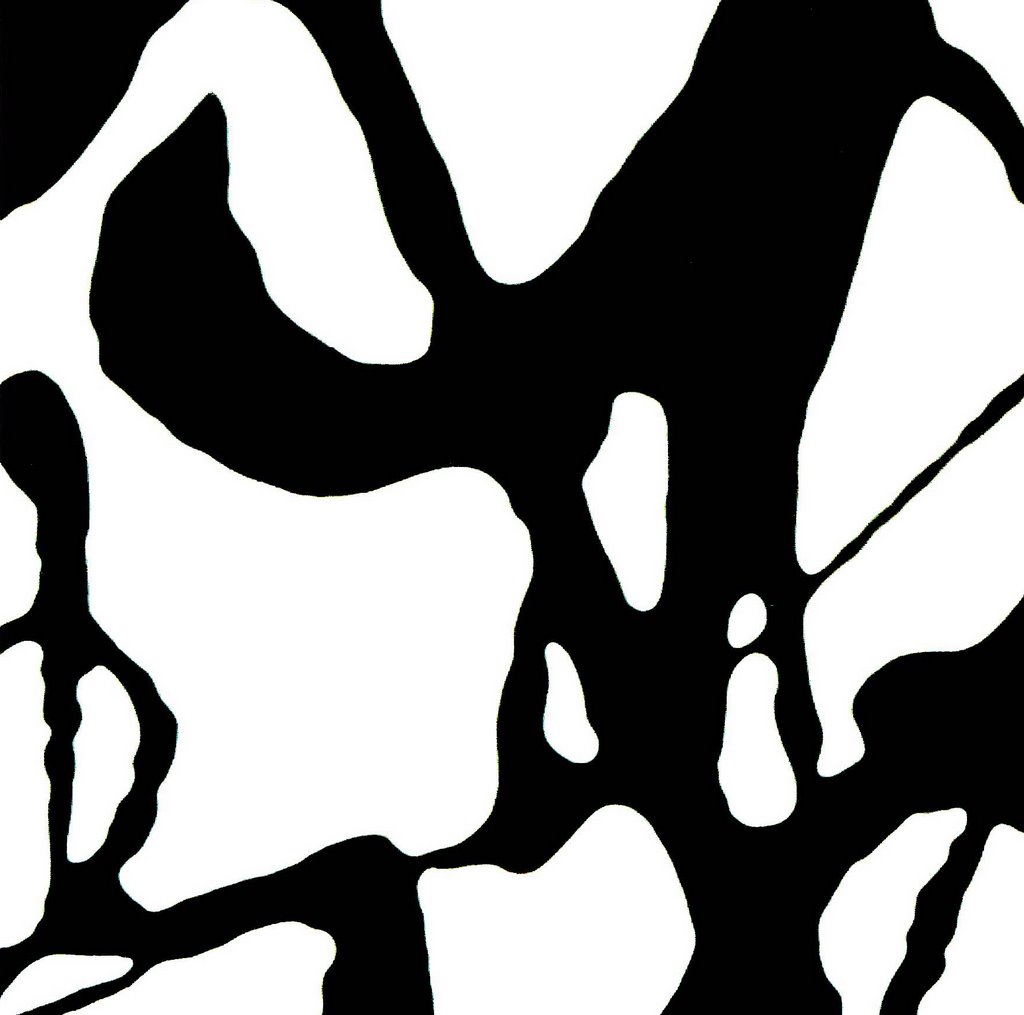
Today I stumbled on a website with a kind of trick on it.

http://www.devilducky.com/media/47884/

The effect of this ´game´kinda reminded me on the works by Michel Francois, he also like´s to play with the way we look at things, simple natural hallucinations can influence the way we look at things and might change our ideas aubout the world surrounding us.

He´s the kind of artist that like to create chaos and than see what comes out of it, how you can find structure in the chaos again and then create something meaningfull out of it.

anyway...

Just try the game.

What ideas brings this on?
Is what we see directly, reality?


info about Michel Francois you can find here.

http://www.kunstonline.info/levelone/php/persons/personpage.php?chapter=about&id=235

http://www.curtmarcus.com/artists/artists_detail.asp?artistID=7

http://www.google.nl/search?hl=nl&q=michel+francois&btnG=Google+zoeken&meta=


Monday, July 03, 2006

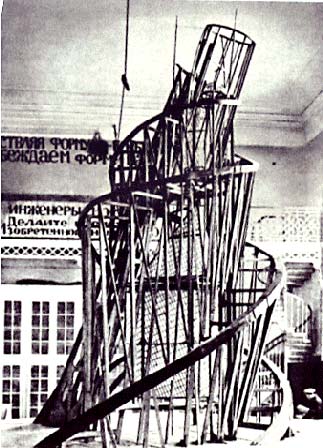
Vladimir Yevgrafovich Tatlin


Today this artist appeared from way back of my memory, and i realised that he´s worth studying for a while.
This is just a post to bring back a long forgotten but very interesting artist.

http://en.wikipedia.org/wiki/Vladimir_Tatlin

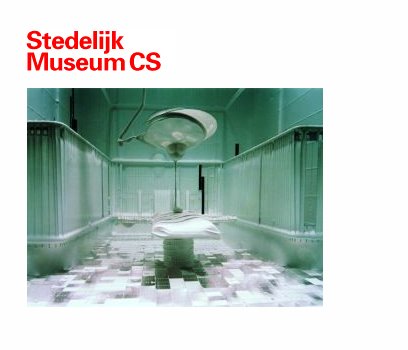
Saskia Olde Wolbers - The Falling Eye


23.06.06 - 24.09.06

‘The Falling Eye’ is the first solo exhibition of Saskia Olde Wolbers (Breda, 1971) in Stedelijk Museum CS.

“Olde Wolbers is a fabulist in a class of her own”, Artforum, New York, 2005

“Film art doesn’t get much better than this”, BBC Art Review, London, 2005

http://www.stedelijk.nl/oc2/page.asp?PageID=1353

Damien Hirst in talks to replace rotting shark


The 1991 work, bought by Steve Cohen from Charles Saatchi for £6.5m, has deteriorated because of the way it was made


By Cristina Ruiz and Gareth Harris Posted 1 Juli 2006

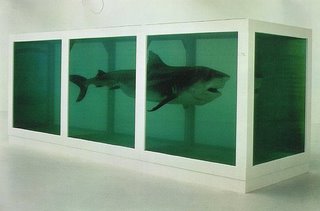
Damien Hirst is in talks with US hedge fund manager Steve Cohen to replace the shark in his iconic work, The physical impossibility of death in the mind of someone living, 1991.
The animal suspended in formaldehyde has deteriorated dramatically to the naked eye since it was first unveiled at the Saatchi Gallery in 1992 because of the way it was preserved by the artist. The solution which surrounds it is murky, the skin of the animal is showing considerable signs of wear and tear, and the shark itself has changed shape.

In a statement to The Art Newspaper, Hirst’s company Science Ltd said: “Damien will happily help to refurbish [the shark] as he would with any of his works that are over 10 years old.” The case raises important questions about the longevity of contemporary works of art made with unconventional materials.
The shark was commissioned by British collector Charles Saatchi directly from the artist in 1991 for £50,000. It was sold to Mr Cohen in late 2004 in a deal brokered by the Gagosian Gallery for a figure reported by the Saatchi Gallery as £6.5m.
This price is the highest ever paid for a work by a living artist with the exception of early work by Jasper Johns.
Speaking to The Art Newspaper, the dealer Larry Gagosian said: “The shark is a conceptual piece and to substitute a shark of equal size and appearance, in my opinion, does not alter the piece. Steve Cohen is very happy with the piece and is not troubled at all with having to substitute it.

It’s not a direct analogy but if you have a work by Dan Flavin and one of the lights goes out and you substitute it, it doesn’t matter.
It doesn’t affect the significance of the piece, or the value of the piece.” When the sale of the shark was announced, we raised questions about the shark’s long-term preservation after speaking to conservation scientists and natural history specialists.
Oliver Crimmen, curator of fish at the Natural History Museum who advised Hirst on the necessary measures to be taken for the conservation of the shark in 1991, said the long-term preservation of large specimens for scientific purposes requires an alcohol-based solution rather than formaldehyde.
If a formaldehyde solution is used then a large specimen like the shark would need to be injected with this to prevent internal decay, according to Alexis Turner, a natural history antiques dealer.
But Mr Crimmen said that Hirst “did not inject the deep tissues of the shark with formaldehyde and this has caused it to undergo some changes in shape.” He believes the tissue of the shark could be shrinking and put the cloudiness of the formaldehyde down to the chemical composition of the solution used by the artist.

According to a 2000 report which includes a section on the Hirst shark by Alison Bracker of the Royal College of Art, the artist used a formaldehyde solution of 5% strength for the work. The report states that “conservation scientists have queried the wisdom of employing a weak solution to preserve an entire shark.”
Speaking to critic Stuart Morgan in 1996, Hirst said: “I did an interview about conservation and they told me formaldehyde is not a perfect form of preservation... They actually thought I was using formaldehyde to preserve an artwork for posterity, when in reality I use it to communicate an idea.”

Earlier this year a new, smaller version of the shark was purchased by the Samsung Museum in Seoul for $4m from the Hilario Galguera gallery in Mexico City.
Hirst has since said that he is working on other versions of the shark in a tank.

In a second statement to The Art Newspaper, Hirst’s company, Science Ltd said: “When the shark was originally preserved 15 years ago, a different technique was tried. ith this technique, formaldehyde wasn’t injected into the deep tissues as it was with all the other formaldehyde works made before and after this.”
“The process didn’t work and Damien has never been satisfied with the look of this shark. He is currently in discussion with Steve Cohen about refurbishing the work, though nothing has been decided yet.”
If Hirst does replace his iconic shark with a new specimen, will it compromise the integrity of his original?

Art history will be the judge.

Tuesday, June 27, 2006

Monday, June 19, 2006

Artist laughs his head off at the RABy


David Hensel could not help but chuckle when he went to see his sculpture on display at the Royal Academy.
At first, after wandering through the Summer Exhibition, he concluded that it was nowhere to be seen. But eventually he found it. Or rather, he didn't.

The empty plinth (top) and One Day Closer to Paradise (below)
What he did find was the sculpture's empty plinth and wooden base displayed as "Exhibit 1201".
Mr Hensel had never considered the empty plinth a work of art in itself. But the exhibition selectors evidently did. So, too, did visitors, who pronounced it beautiful.
No one seemed to notice, or mind, that the sculpture itself, a laughing head entitled One Day Closer to Paradise, was missing. "What apparently happened was that they had become separated and the selectors judged the empty base a good enough sculpture in its own right to include it in the show," said Mr Hensel.
"How this happened is not yet clear. The rest of the sculpture is lurking somewhere in the basement, but rather than finding this a reason to blame the organisers, I am very amused, because it says something about the state of visual arts today."
The plinth, cut from a slate mortuary slab, took less than four hours to make, the tiny wooden base for the sculpture, fashioned from boxwood, less than an hour.
But One Day Closer to Paradise, made from jesmonite, took rather longer - two months in fact. No one was less surprised than Mr Hensel that a rather odd-looking, bone-shaped bit of wood should be accepted for the world's largest open-submission contemporary art exhibition.
Yesterday, the Royal Academy, with great candour, said no error had been made on its part.
"David Hensel's work was submitted to the Royal Academy of Arts Summer Exhibition 2006 as two separate pieces," it said in a statement.

David Hensel: 'Delighted'
"Given their separate submission, the two parts were judged independently. The head was rejected. The base was thought to have merit and accepted; it is currently on display. The head has been stored ready to be collected by the artist. It is accepted that works may not be displayed in the way that the artist might have intended."
Clearly amused, Mr Hensel said: "Anything, even if it is not intended to be art, can still have a presence. I like the look of the plinth and support. I can recognise it as a nice object. But I never thought the selectors would choose it as an exhibit."
An essential part of the London art calendar, the Royal Academy's summer show is visited by more than 100,000 people and attracts about 9,000 entrants, including unknown and emerging artists alongside more established names. Mr Hensel, 61, a member of the Royal Society of British Sculptors, intended his work to illustrate an unknown man contemplating the journey to paradise.
"Perhaps that is what happens when you ascend to heaven," he said. "You become invisible, like my sculpture."
He added: "That an empty plinth makes it to the exhibition is the stuff of cartoons and is also a comment about the apparent vacuous nature of some contemporary art.
"I am delighted to have made an empty plinth that isn't empty, where the exhibit itself is merely invisible."
Visitors to the Royal Academy have praised the empty plinth for its beauty, unaware they were praising an unintentional mistake. "The sculpture is a mixture of heavy stone with a light piece of wood on top. I like the total effect. It is a really nice contrast," said one Danish visitor.
Amy Woolley, 27, from south London said: "In a context like this, it is difficult for it to work on its own. But if it was in more of a minimalist show, it would definitely seem more beautiful."
But David Connolly, 34, from Streatham, was a step ahead. "It is a joke. Maybe they have lost the piece that was meant to go there."
Mr Hensel, from East Grinstead, West Sussex, exhibited a bronze cherub in the Summer Exhibition two years ago.
Happily, it was displayed in its complete form.

Friday, June 16, 2006

the studio as a Supermedium


This is probably one of the nicest shows around right now, curated by busy bee, artist extra-ordinaire Ton Schuttelaar.
Try to see this one when you´re able to visit Holland (or are there already, then you should without question)
http://www.supermedium.nl/html/aboveandbeyond.html

Also visit www.tonschuttelaar.com

Monday, May 29, 2006

Damien Hirst shocks again


London - The latest project of British modern artist Damien Hirst - a skull cast in platinum and encased in diamonds - will be the most expensive piece of artwork ever created, reported The Observer newspaper on Sunday.Entitled For the Love of God, the life-size human skull, covered in 8 500 diamonds, will cost between £8-million and £10-million to create.Hirst is best known for his earlier conceptual works, in which creatures including a shark and a cow were pickled in formaldehyde inside glass tanks."We have been buying diamonds slowly and have worked out that it will take about eight-and-a-half thousand to completely cover the surface of the skull," said Hirst.

He said creating the world's most expensive work of art would be "a lot less stressful than putting a bloody great shark in a tank of formaldehyde"."I just want to celebrate life by saying to hell with death. What better way of saying that than by taking the ultimate symbol of death and covering it in the ultimate symbol of luxury, desire and decadence?" he said."The only part of the original skull that will remain will be the teeth. You need that grotesque element for it to work as a piece of art."I want people to see it and be astounded. I want them to gasp."
AFP

Inside Vittorio Roerade´s ivory Tower


Sunday, May 28, 2006

TalR

Here´s a link where you can see a small movie of the new sculpture show by TALR at contemporary fine arts in Berlin.

http://www.vernissage-tv.com/06/0506/talr042906.mp4

Also check original site

http://vernissage.tv/blog/

Thursday, May 25, 2006

INTERVIEW: The Celebrated Walking Blues Michele Robecchi talks to Francis Alÿs


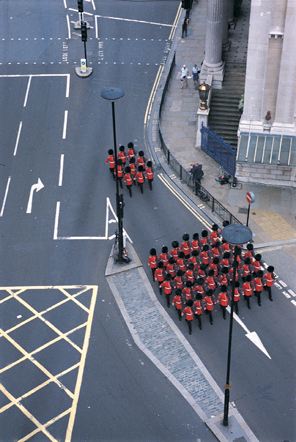
Francis Alÿs is not an easy man to track down. A perfect mirror image of his work, he seems to be constantly moving from one place to another, and the wide range of media he uses – from painting to video and performance – can’t help but reinforce the conviction that with Alÿs we are called to deal with a rather mysterious, if not elusive, figure. Contemporary managed to meet Alÿs in London a few weeks prior to the opening of Seven Walks, one of his most ambitious projects to date, realised in collaboration with Artangel and Bloomberg, only to discover that he’s actually a very open, relaxed and affable character, every inch the articulate conversationalist and very willing to discuss his work in detail. In spite of the unequivocally high production values behind Seven Walks, Alÿs often emphasises the simple nature of his concepts, and the fact that he uses the first-person plural when describing the making of his work provides an insight into how much importance he places on the collaborative side of his practice. Unlike many other projects promoted by Artangel, Seven Walks revolves around different ideas rather than one single strong proposal, addressing various elements that the artist acknowledges as typical of the city of London, such as the Coldstream Guards, bottles of milk, the proliferation of CCTV cameras and the commuting phenomenon.

Francis Alÿs: The common trend of all the projects is walking, in a very loose sense. It could be me, it could be somebody else. Obviously all of them address the city of London, but there was no solid proposal aiming at one special single installation or film. In fact, there was no proposal at all. I’d been in touch with James [Lingwood, co-director of Artangel] for a few years and we weren’t getting anywhere in terms of putting something together, so I decided to come to London anyway and spend some time over here, and that lead to the first project, which was Railings, and then one thing led to another. It’s more like a suite of little or big interventions, which I hope will create some kind of narrative of one person in one place at a specific moment. But it’s not like a show – there’s never been any kind of master plan. We kept building along the way. The whole project took six or seven visits to London over a period of a year and a half. This is the first time that I’m in a situation where I am doing this articulation of scenarios or episodes in a specific location that’s not Mexico, which is very interesting. I think it has to do with the fact that the image I had of London as a city was very confused. I’ve come here a few times, but as a visitor. I always had an outsider’s point of view. I started by addressing the main features of London partly because of the absence of a big project. So I got things like the Buckingham Palace Coldstream Guards, or the railings – things that strike me as details of one bigger entity. The development of the project was very much like one discourse linked to another. And ultimately it could have continued on and on. That’s why the last walk, in a very catholic way, is about resting. You know, the working week and the Sunday rest. It’s very much related to the temporality of my stay. I think that if I had stayed another year it could have been 13 or 17 walks. It’s quite an open figure. It is more representative of an attitude than of one specific project.

Michele Robecchi: So the Railings film was the first step?FA: Yes. It uses the sound of the railings and represents the character of the place. That’s partly because I can’t think of a city that’s got as many railings as London does. I always export my way of working to different places. I extended and created a different version of something I was working on before while in Mexico and just pasted it on to London. MR: Did you deliberately try to focus on more than one single subject?

FA: I think it’s the way I work – I’m quite dispersed. MR: When Faith Moves Mountains (A Project for Geological Displacement) (2002) was built around a single strong idea. It’s not dispersed.FA: Yes, that’s probably true. That was one comment, or allegory. Seven Walks is much more like a structural kind of story. We talked a lot with James about the idea of rumour – how information passes from one person to another. We took it as a background, as a metaphorical way to talk about the project. It’s a fragmented identity. Once this was in place, we were also afraid of being tied to the concept of me, or somebody else, performing but I think I eventually managed to do something different while preserving my own language at the same time. For example the railing piece is very simple – it’s just walking along the railings with a stick. There are different moments – the first one is walking, then there’s a sound created by the architectural pattern, so you get the sound of a column first, then the railing, another column, an entrance, which generates a moment of silence, and then another column, the railing, and so on. The motion of the walker creates a melody that records the architecture. So that was the first chapter – the railing. The second chapter was to create a repertoire of the possible sounds available. It was a second short film. The third one was to play with it. I sort of improvised on the railings while I was walking. I understood that hitting them in a specific part, with a specific strength or speed, would make them sound different. And I started playing with that and creating more interaction with the material.

MR: The Coldstream Guards piece seems an evolution of Do It (1999), the work you did in Venice in 1999 where you and Cuauhtémoc Medina hung around the city carrying half a tuba and looking for each other. If you didn’t meet, would you have considered the piece as aborted?

FA: We actually thought it would have lasted longer. We met after two and a half days and were a little disappointed that it happened so quickly but it was a wonderful way of rambling through the city – we had some kind of role but at the same time it was just about wandering around. Ultimately we never really set a limit on time. It could have happened after five days or two hours. There’s no logic behind it – they’re random meetings. Except that after a while people started saying ‘Hey, we saw the other guy over there ten minutes ago’, so we were helped a little by the rumour spread by the piece itself, which was nice.

MR: John Cage once organised a future meeting with a few friends of his and years later when he went to the pre-established meeting point he was alone. The operation failed and yet I reckon it was successful in a different way.

FA: It could have failed. One of us could have got fed up and just dropped out. At the end of the day it was pretty much like a love story – two people looking for each other, a sort of sexual reunion, and then playing just one note with the tuba. In London I was curious to see how the same scenario would work if one multiplied the number of the participants. So we did a test with a group of musicians dispersed in the city on a Sunday morning when it was completely deserted. We were hoping that they would try to make bird calls and that once they met there would have been a battle of melodies which would eventually end up in a growing noise produced by the instruments calling each other. Unfortunately it looked a bit too much like the one in Venice, so we reduced the language to its minimum and started working with a group of Coldstream guards and just used the sound of their steps. It became a more minimal and serial piece – serial in terms of music and minimal because what they were doing was reforming or rebuilding this perfect square of eight by eight soldiers. So there was this growing element of the sound of the steps, which had more to do with Steve Reich, and the construction of this very rigid structure a la Carl Andre at the same time. I also wanted to address the fact that in England there is a long tradition of walkers, from the 19th century to people like Richard Long and Hamish Fulton. Do It in Venice was more like a bizarre love story, the guards piece is a social allegory. It reflects our need to identify with a group. The difference was quite striking if you think that they were conceived almost from the same premise.

MR: You once said about the early walks that if you felt they were getting nowhere, you would just drop out in the middle of it.

FA: Yes. I’ve had some like that. Not that these pieces were really aborted, but some of them drastically changed direction. Usually when something gets diverted, I just look for another way to make the same point. I don’t think any scenario has gotten lost. Not so far at least. Sometimes you build up something in a slightly distanced way, and then you get here and the confrontation with the place itself very quickly cancels the project. It’s just not the right moment to do it. The history of the place itself offers its own narrative. After all, only a small part of my work is planed ahead, a lot of it just takes place during the making. Once the parameters for the piece are set you just let it go. There’s little control involved in the actual outcome or development of the piece itself. But yes, it has happened, even recently, that something went wrong. One turned out to be a total disaster. It was great though – it was very interesting because it was totally liberating. I went as far as starting the action and then it just went wild. And it was actually really nice. I just stepped out of the whole thing and watched it. They were just doing what they wanted, they didn’t give a shit about what I was trying to do.

MR: And it never happened that, years later, you would reconsider a scenario that originally didn’t work for a different situation?

FA: Oh, they often come back, you know? It’s more like when you imagine a scenario in a certain location and you start being there, and eventually it fails or it just doesn’t happen, and then years later you’re invited to a very different context and this new context gives you the missing elements you were looking for. And then suddenly something clicks and that’s it. Afterwards it goes really quickly. We can all fail but it’s important to realise that the context is often the device that can give you that little missing information you needed to make a piece work. Another thing that vaguely links all the different projects of Seven Walks is that their plot is fundamentally very simple. Each project could be described in two or three lines. They don’t develop a very complex narrative. Most of them should be able to circulate without a need to see the images. Like walking along the railings with a stick – you can figure out an image of it. Or 64 guards walking in the city looking for each another. This idea of maintaining a very simple structure to the scenario is always there, maybe because there is a series of different chapters, and you can only say so much in each of them, otherwise you start to lose the context. I think there are just a few things that you can say as an artist. There are just a few things that I feel I can say or want to say, and I’m very obsessed with saying them by considering all the different angles. There aren’t many occasions when I think I might have something to add.

MR: How much professionalism and how much spontaneity is there in your projects now?

FA: Well, some of my pieces are more structured, some are more ambitious. Hopefully I’m not getting too controlling in that sense. What I’d like to keep open is this surprise element, this randomness. Maybe they’re getting more focused.

MR: It’s a bit like a jazz musician. After years of jam sessions you inevitably develop some reference points in your mind. You have a repertoire of tricks you can use in case you don’t know what to do.

FA: You can always play a trick or do a little kind of dance, but you lose something, you know? It’s good to be a bit more spontaneous. Though I think you know your limits much better than when you’re younger, there’s a better understanding of what you’re doing. I haven’t been in the business for so long, to tell the truth. I started quite late, when I was 30. I’m not physically young, but I’m not an old artist either. I have the age to be considered mid-career but I’ve only been in the business seriously for about 14 years – which is not that much in comparison to artists who started in their teens. There are artists in their 30s that have 16 or 17 years of experience.

MR: Do you think that with time you more often find yourself in familiar situations and the fact that you’ve been there before inevitably helps you to deal, or not deal, with it at all?

FA: You know how to deal with it, but on the other hand you have one option less because you don’t want to go through the same negative experience again. I never really thought about it, but I think it’s more because you understand yourself a little better. I don’t know if it’s because time is running out faster after a certain age, and you try to do what you reckon is urgent first. In a way I hope the fact that I’m so dispersed will help me better understand what I want to do. I’m not really sure, to be honest. It’s a good question.

MR: Do these walks somehow mirror the walk of life? Starting up, going ahead, developing expectations, having unexpected meetings, adapting to changes, the risk of failing…

FA: Yes. Probably, yes. But sometimes, during your evolution, you also become more risky somewhere. When things get more controlled they also tend to become more anonymous, more feasible. On the other hand, every time you try to challenge yourself or the place you live in, you push it a bit further.

MR: I think this aspect of your personality is evident in your work and it’s actually one of the things that I like more about it. Whereas some artists often display a striking clarity of thought from the beginning about what’s going on, and how things should be and develop a strong, single perspective, you always seem to remind your viewer that there’s another side of the story, if not more.

FA: Yes, I think it’s something I’ve had from the beginning. I deeply admire people that manage to go like caterpillars in one direction – I envy them but I can’t do it. I’ve tried; I get bored. I always work on at least 6-10 projects at the same time and I jump from one to another. It’s the only way I can move on. Stepping in, stepping out. It’s the same with media. I do two hours of drawings, maybe I’ll go and test something on the street, and then do a painting. I need that kind of skip of attitudes over the course of the day.

MR: Do you decide which is the most suitable medium along the way, or do you already have something in mind when you start?

FA: I start with an idea, then it develops. Usually you start talking to somebody else, and that person can translate differently; it grows, it starts to get a shape. Usually the medium defines itself. It could be an animation, it could be a drawing, a painting, a text or a sound. But that’s a second stage of the evolution. It probably means that I’m a failed writer. You’d love to do everything you want but you cannot. There are certain things you cannot express but through a painting. Painting enjoys a certain advantage. Some people would rather look at a painting than a photograph, or give more time to it. That possibly gives you a stronger contact point with the public. Also, because the images are figurative, they’re more straightforward. I use painting in a very traditional way. It’s a very good mental space for me. I think the multiplicity of media sometimes has kept me from being cornered into one specific audience. I know that if I would I’d be isolated within a very strict contemporary art world circle.

MR: Not having a specific talent for something in particular helps you to relate to a lot of different things. But it can represent a handicap too, whereas being fully aware of the ability to excel in something can be very confidence boosting.

FA: That’s true. I think there’s a general demand that pushes you towards one single thing. Our society is evolving into this very specialist world. Everybody is good at one very specific thing. That’s particularly clear in the art market. People want to be able to classify you.

MR: The downside is that there’s a lot of competition involved too. I think competition plays a big role in shaping your character when you’re exceptionally talented in something. You get defensive if there’s a new guy out there. You feel like you have to brace to your position, unless of course you’re so over-confident that you don’t even mind.

FA: Yes. It has been a great help to be in Mexico in this sense, and to be able to step out of it, although the country is changed a bit now. The art scene is becoming more global. But the reality of the city is so cruel; it’s so strong that it automatically makes you reassess why and how you’re trying to do what you do. It’s a very good test for your work and it was a perfect place for me to start. Nobody knew me, nobody gave a shit. And I got really addicted to the place. And living at this slight shift, this distance from my own culture, was quite helpful in starting to develop my practice. Then the years went by and after 20 years I’m still there. I just find it a very lucky coincidence that I had the opportunity to start in Mexico City. My upbringing was quite distant from Mexican culture. I consider my stay in Mexico City as a very good accident. It helped me to go a bit faster than if I had done it elsewhere. There’s a strange sense of urgency in Mexico. I was so used to the situation in Europe that I would have probably found it more difficult here.

MR: In Antwerp, the city where you’re from, there seems to be a very lively art scene though. There are a lot of good artists coming from there.

FA: Yes, there are very good artists. And I’m interested in that, from a distance. I recognise that there are certain ingredients of my work in common with them. Well, it’s the place where I’m from – it’s not something that you can wash away. I can’t, anyway. But for me Mexico City is better. I think one of the things that kept me in Mexico was that the place regenerated itself quite well over the last 20 years or so, out of which I’ve spent about 14-15 in the art world. Each time something’s getting in place, something else comes along that kicks it away and proposes a different attitude. It happens in a quite cyclical way, there’s always something new coming in that forces you to question your own practice. Maybe it’s got to do with the place itself. It’s strong. You always have to reposition yourself in order to not be overwhelmed by this gigantic urban entity.

MR: Speaking of gigantic entities, what was the genesis of When Faith Moves Mountains (A Project for Geological Displacement)?

FA: I was invited to the third Bienal Iberoamericana de Lima. It was conceived as an event to counteract [former President Alberto] Fujimori with the aim of recuperating civil space and culture. The end of Fujimori was in sight, and the country was very depressed. You couldn’t see a way out. I suppose the fact that there were those sand dunes around the city gave us the idea for the metaphor. You know, to do something that seemed impossible. It’s a very pretentious way of putting it, but it’s the shortest! Anyway, the project was turned down by the Bienal – they said it wasn’t feasible. So I spoke to Cuauhtémoc and we decided to keep going anyway. Eventually they called back and the project was reintegrated in the programme, and from there it was just pure logistics. The idea was very simple. The action was quite simple too. The premise of the piece was gratuity – nobody was paid and everything had to be done through generosity. There was a lot of good will or faith involved. We made four journeys just to go to talk to the people and try to convince them that it was worthy to be part of the action. In terms of energy, about 80 per cent was probably used just in trying to get people to participate and some other people to donate hot dogs and drinks after the event, or to get us buses, shovels, etc.

MR: You’ve developed a strong professional relationship with Cuauhtémoc Medina along the years. The cooperative side of your projects seem to be a really important part of your work.

FA: It actually comes from a very simple thing. I’m not trained in any medium, so once I define one, I start looking for specialists in them. Then there’s a kind of bouncing back and forth game, and that I really enjoy. That really develops a project and leads it. Most of the time the collaboration is good and it wouldn’t have happened if I had just continued on my own. Maybe I’m maintaining the structure of the architectural studios. Architecture is pretty much teamwork.

MR: You deal with a lot of different media and yet sculpture seems to be strangely absent from your work. How come? Is it because you’re an architect and…

FA: Yes, I think it’s because of my architectural background. At first, when I started working I tried to avoid adding things because I was a little frustrated by certain aspects of architecture. I was more interested in stories. But I’d like to do one now. I think it’s an interesting phenomenon and I recognise that some people are very good at provoking something just by putting you in a space in confrontation with one object. I think that another reason why I didn’t use sculpture was the difficulty of justifying the need for adding objects in an environment as saturated as Mexico City. It’s a place extremely full of elements to play with. [pause] Actually I’ve been invited to Skulptur Projecte in Münster in 2007. [laughs]

MR: [laughs] Splendid occasion to make amends.FA: Yeah. It will be challenging.

Michele Robecchi is Senior Editor at Contemporary
http://www.contemporary-magazine.com/

Daan van Golden


Daan van Golden

DAAN VAN GOLDEN

The Dutch artist Daan van Golden locates both his life and his art between two quotations: ‘Youth is an art’, (Oscar Wilde) and ‘Dying is an art’ (Sylvia Plath). Although at first sight paradoxical, the statements are actually two sides of the same coin. Originality is not an artistic quality. What we learn from Van Golden’s work is that critical observation is as good, if not better, than the pretension of invention. One tale Van Golden likes to tell is the story of an emperor who commissioned a mural from two separate groups of Greek and Chinese artists. So that both teams couldn’t see the work of the other, a temporary wall was built to divide the room in two. When both murals were finished and the partition came down, the emperor saw that the Greeks had merely polished their wall so that it gently mirrored the Chinese painting.

During the 1980s, thanks to a renewed interest in the re-use of visual material, Van Golden inspired a number of young Dutch painters, as diverse as Rob Scholte and Lily van der Stokker and, retrospectively, we could say that he was dealing with ‘contemporary’ problems of appropriation and simulacra long before these words existed.Yet, perhaps because he is too much of an artist’s artist, van Golden has never received the public attention he deserves.

In 1999 he represented The Netherlands at the 48th Venice Biennale with an important retrospective in the Rietveldpavilion that covered more than 30 years of artistic activity, spanning from 1964 to 1998. In the accompanying catalogue, Commissioner Karel Schampers declared that van Golden did not fit in with the norm of modern art that, according to the writer, ‘subverts existing or recently developed frames of reference’. His argument was that because of van Golden’s ‘self-imposed isolation’, his work doesn't ‘conform with the expectations of modern art’, whatever they may be. But despite Schampers’ words, the exhibition showed very clearly that van Golden’s oeuvre is a constant reflection on (if not perversion of) the development of painting; the result of a confrontation with modern masters such as Mondrian, Matisse, Picabia or Pollock, to name only his most obvious references.

Van Golden was born in Rotterdam in 1936. He trained as a machine operator in a technical school, while being given painting lessons on Sundays from a Jesuit priest. During the 1950s he worked in the Bijenkorf department store as a window dresser. During the 1960s he lived successively in America and Mexico, in Paris, Tokyo, Barcelona, London, where he was active in fashion photography, and Marrakech. In Paris, in 1962, he created a pavement drawing in homage to the late Yves Klein who had died earlier that year and whose exquisite blue has been an important impetus for him. In Tokyo, during the early 1960s, he earned his living as a film extra in gangster movies (mostly in the role of the villainous white man), and as an English teacher. Like his hero Klein, he became interested in meditation and Zen philosophy. And as a relaxation exercise he started to paint copies of patterns from scraps of wrapping paper, handkerchiefs and stylised floral motifs.

In their emphasis on the flatness of the painting and the autonomy of the object – some of the works have been shown leaning against the wall, one behind the other, or lying face upwards, on a base – van Golden’s paintings echo Jasper Johns’ American flag and target paintings, showing us the ambiguity of notions such as abstraction, representation or decoration. And in spite of the old debate between abstract and representational art, we now know that all images are anthropomorphic. For as children see figures in clouds, Van Golden shows us faces in a photograph of pansies. In Study Pollock (1991), for example, he enlarged and copied a detail from an abstract painting in which he saw distinctive figures. And via observation, a quotation from an abstract work becomes a representational painting.

For this reason, the distinction between abstraction and representation in Van Golden’s work has been replaced by the use of ‘objective images’ (borrowed from sources such as newspapers, magazines or other artworks) and ‘subjective images’ (created by the artist himself as the result of his manipulation of pigment or any other material). But even here, van Golden doesn’t make a principle distinction between objective and subjective. Everything he uses comes from somewhere. Creation ex nihilo is a myth. Even if van Golden’s work seems objective, there is always an element of the subjective; it is the artist, after all, who chooses which images to use.

The highlight of van Golden’s career so far was his participation in the 4th Documenta in Kassel in 1968, where he showed in a room next to Yves Klein. Indeed it was such a highlight that for the next ten years he didn’t exhibit any work (he travelled extensively during this time). Then, in 1978, the birth of his daughter Diana gave rise to an important series of photographic works in which her natural, lively, unposed presence plays the central role. The project finished in 1996, when Diana came of age, and a selection was published under the title Youth is an Art.

Daan van Golden’s output is fairly slow because of his critical sensibilities and his meticulous working methods. As he has never been obsessed by the art market – in this context van Golden likes to quote the Dutch poet Roland Holst who stated that ‘Art is not a contest’ – he always maintained the luxury of working in his own slow rhythm, characterised by a strange combination of relaxation and concentrated attention. Therefore, his oeuvre appears to be the result of an almost organic circularity in which one work generates another.

His most recent exhibition at Micheline Szwajcer’s Antwerp gallery is once again proof of van Golden’s coherence and continuity. Heerenlux (2003) reflects the presentation van Golden made in the same space exactly ten years ago. In 1993, he showed under the same title, named after the brand name of the enamel paint he used, a series of four almost identical paintings based on a red on white foliage pattern, taken from a piece of silk cloth. For the current show, he chose a fragment of this painting to make two new series. In the first series the three oil paintings look exactly the same. Closer examination though reveals differences due to the hand-painted technique. The second series shows another fragment in three different seizes. Surprisingly, the smallest image looks as monumental as the biggest.

Oscar Wilde already knew that ‘the true mystery of the world is the visible, not the invisible’. This is also what Daan van Golden wants to show. A confrontation with his work drastically changes our conception and perception of that world.

Lieven Van Den Abeele

Sunday, May 21, 2006

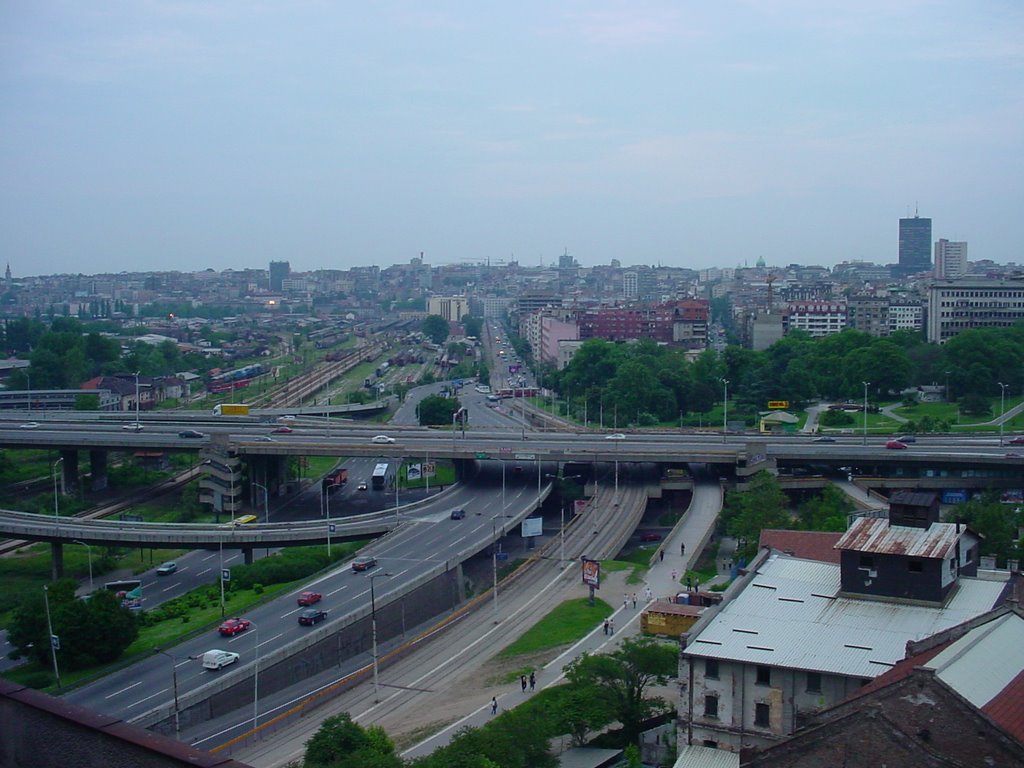
Outside a studio in Beograd

Adrian Searle on art


Loads of reading material from this auteur
aspecialy welcome on these rainy sunday afternoons.


http://arts.guardian.co.uk/critic/archive/0%2C%2C752849%2C00.html

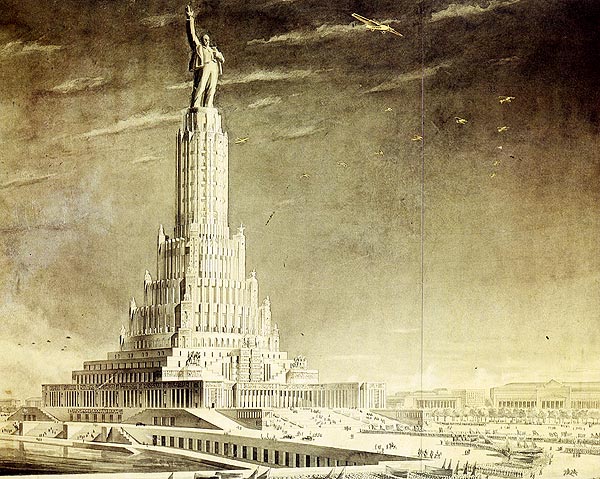
megalomanic architecture in USSR


These plans just didn´t make it...

http://www.muar.ru/ve/2003/moscow/index_e.htm

Thursday, May 18, 2006


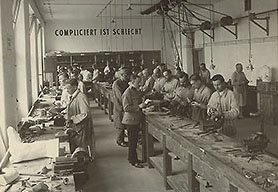
I found this picture somewhere on the web and the text on the wall intrigued me. 'Compliciert is schlecht' = 'Complicated is bad". Could one also apply this rule to the artistic process? Or is it only valid for the industrial production process in which easiness and simplicity in production are one of the main goals? Do artist make products or do they make objects? What do you think?
Outside the Vliegtoren
48 Hours LIFE STREAMING VIDEO !
From Saturday 20 May 0:00 till Sunday 21 May 24:00

Turner Prize 2006 shortlist announced


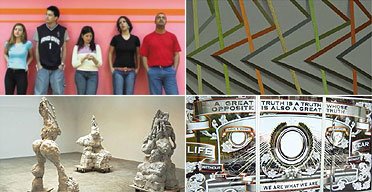
Tate has announced the four artists who have been shortlisted for the Turner Prize 2006.
The artists are: Tomma Abts, Phil Collins, Mark Titchner and Rebecca Warren.

http://www.tate.org.uk/britain/turnerprize/

http://arts.guardian.co.uk/comment/story/0,,1776471,00.html